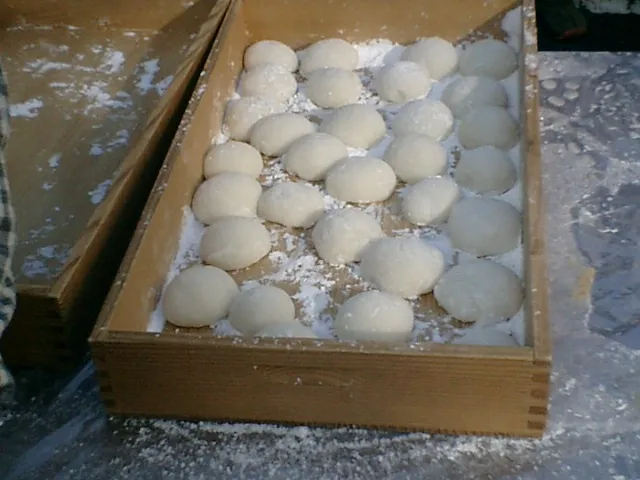
Steam, Pound, Repeat: Your No-Usu Mochitsuki Game Plan for 2026
Every December, someone in a group chat asks the question: can we do mochitsuki at home? And every December, someone else answers with a photo of a hundred-pound stone usu and a wooden kine the length of a canoe. Fair enough. That's the classic image. But the tradition is older and more flexible than the equipment list suggests.
Mochitsuki — literally "rice pounding" — is a Japanese New Year ritual built around steam, teamwork, and a pot of glutinous rice that gets transformed into something chewy and faintly sweet. Families in the US have been adapting it for decades with whatever they had. This year, let's make that adaptation deliberate rather than improvised.
First, Decide What You're Actually Making
There are two textures people mean when they say mochi, and they behave differently.
Pounded mochi is smooth, elastic, and slightly translucent — the kind you stretch over sweet beans or toast until it puffs. It comes from steaming glutinous rice and working it while hot.
Mochiko-based mochi is made from sweet rice flour and water, steamed or microwaved. It's softer and more forgiving, and it's what most American home cooks have actually eaten.
Both are legitimate. For a party, I'd argue pounded is worth the effort — the pounding is the entertainment. But if you have small kids or a tight kitchen, mochiko gets you 80 percent of the way with 20 percent of the cleanup.
Pick Your Machine
Stand Mixer
A heavy-duty stand mixer with a dough hook is the closest thing to a mechanical kine. Cook your glutinous rice until fully tender (steamed is traditional; a rice cooker works fine), then move it hot into the mixer bowl and let the hook run on low for 8 to 12 minutes. Stop every couple of minutes to scrape down and fold. The rice goes from distinct grains to a shaggy mass to a smooth, tacky dough. You'll know it's done when a pinch stretches thin without tearing.
Limitation: bowl capacity. Two cups of raw sweet rice is a comfortable batch for a 5-quart mixer. Don't push it.
Food Processor
Faster and more violent. Pulse in short bursts — three seconds on, three seconds off — for about two to three minutes total. The blade shreds grain structure quickly, which gives you a slightly less elastic result than pounding but a perfectly good one. Work in small batches and keep the lid on between pulses.
Limitation: heat. Food processors get warm, and hot rice plus a sealed bowl equals steam buildup. Vent it.
Bread Machine
The sleeper option. Many Japanese households use a mochi-making course, and if your machine has a jam or knead function, you can approximate it. Add cooked glutinous rice and run the knead cycle for 10 minutes. The result is closer to a soft, spoonable mochi — great for soup, less ideal for shaping into neat rounds.
The Rice Is Half the Battle
Use sweet rice — labeled glutinous, mochigome, or sweet rice at Asian groceries. It is not the same as sushi rice, and jasmine rice will not work.
Rinse until the water runs mostly clear, then soak for at least four hours, ideally overnight. Skip the soak and you'll get a gritty, uneven pound no machine can rescue.
Steam rather than boil if you can. A bamboo seiro over a wok is lovely, but a steamer basket lined with cheesecloth does the job. Spread the drained rice in an even layer, poke a few holes for steam, cover, and cook 25 to 35 minutes until every grain is tender enough to squash between your fingers.
Safety, Because It's Hot
Steam burns are the real hazard here, not the pounding. Rice coming off the steamer is around 200°F and it clings.
- Wear long sleeves and keep your forearms off the steam path.
- Let the rice cool for two minutes before it goes into a machine — not long enough to firm up, just long enough to stop scalding.
- If you're using a mortar and wooden mallet with a partner, the rule is one person pounds, one person turns, and neither person talks over the other. Count out loud.
- Never let a child near the mixer while it's running. Mochi dough grabs.
Texture Troubleshooting
Crumbly and grainy? Under-steamed rice or not enough working time. Return it to the steamer for ten minutes, then pound again.
Too wet and sticky, won't hold shape? You added water at the wrong moment. Knead in a spoonful of mochiko at a time until it tightens up.
Rubbery and tough after cooling? Overworked or cooled too fast. Mochi firms dramatically as it cools; that's normal. Reheat gently — microwave in ten-second bursts or steam — and it relaxes.
Cracked surface when you shape it? Keep your hands wet with cold water and shape while the dough is still warm.
Set Up a Topping Bar
This is where a home mochitsuki beats a catered one. Pull warm mochi into tablespoon-size pieces and let people dress their own.
Sweet side: kinako (roasted soybean flour) with brown sugar, sweet red bean paste, black sesame sugar, matcha powder, maple syrup and flaky salt, crushed graham crackers for the kids.
Savory side: soy sauce and grated daikon, nori strips, furikake, shredded cheese, toasted sesame oil with scallions.
Keep a bowl of cold water and a bowl of cornstarch on the table. Wet hands for shaping, starch for storing.
Make It Ahead, Eat It Later
Fresh mochi is best within a few hours. After that, it hardens, and that's fine — hardened mochi is not spoiled mochi. Store pieces dusted with cornstarch in an airtight container at room temperature for a day, or freeze individually and reheat by steaming or in soup.
The Point Isn't the Usu
The stone mortar is beautiful, and if you ever get invited to a real mochitsuki, go. But the tradition was never really about the rock. It was about a group of people making something together at the turn of the year, and eating it while it's still warm. A stand mixer on a kitchen counter in Ohio does that just as well.