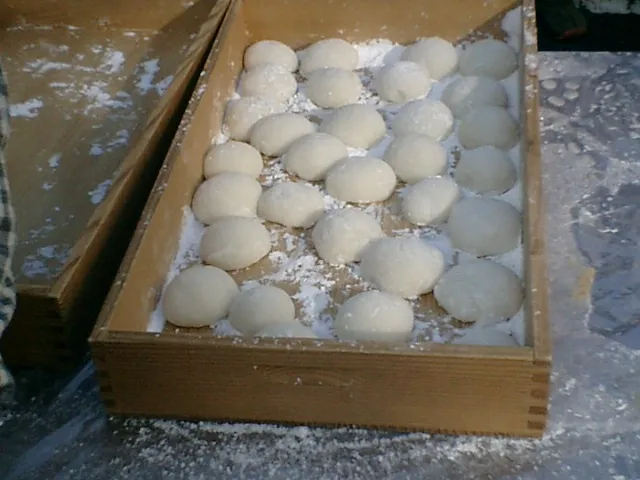
Stop Calling Mochi Dessert: Six Savory Rice Cakes for Cold Nights

Photo: savory mochi grilled soy sauce nori isobe, via i.pinimg.com
I want to make an argument, and the argument is this: mochi is a starch. We treat it like a confection because the sweet versions are what got exported first, but in Japan, mochi shows up in soup, on the grill, wrapped in nori, and covered in cheese. It does everything a potato does, and it does it with better texture.
So here are six savory builds. Each one hinges on the same fundamental move: get the outside crisp and blistered while the inside stays molten and chewy. Learn that, and everything else is seasoning.
The Core Technique
Take a block of kirimochi (the hard, rectangular真空-packed slabs sold at Asian groceries and increasingly at regular supermarkets) and cook it one of three ways:
- Broiler: 4 to 5 minutes per side, until it puffs and cracks. Best for hands-off batches.
- Dry skillet, covered: medium-low heat, lid on, 6 to 8 minutes, flipping once. Best control.
- Toaster oven: 5 to 7 minutes. Best for one person eating standing up.
The tell is the same every time: it should look like a pillow that's about to burst, with browned spots. If it's still hard in the middle, it's not done.
1. Isobe Mochi
The classic. If you make one thing from this list, make this.
Cook a mochi slab until it puffs. While it's hot, brush with a 2:1 mix of soy sauce and mirin, then wrap in a strip of nori, rough side out, and eat immediately.
The nori is doing real work here — it's briny and a little papery, and it cuts the richness of the rice. In Japan this is a snack, often a New Year's one. In my kitchen it's lunch.
Tip: brush the soy mixture on while the mochi is still hot enough to absorb it. Cold mochi just gets a wet surface.
2. Bacon-Wrapped Mochi Bites
The one that converts skeptics.
Cut a block of kirimochi into four pieces. Wrap each in half a slice of thin-cut bacon, secure with a toothpick, and bake at 400°F for 12 to 15 minutes on a rack over a sheet pan, until the bacon is crisp and the mochi is oozing out the ends.
Serve with a dip of equal parts kewpie mayo and soy sauce, plus a squeeze of lime. The salt-fat-crisp-chew combination is absurd. Your guests will eat all of them and ask what the white stuff was.
Tip: thin bacon only. Thick-cut won't render before the mochi collapses.
3. Miso-Butter Mochi Soup
A ten-minute answer to a cold Tuesday.
Bring 3 cups of dashi (or water plus a teaspoon of hon dashi powder) to a simmer. Add 4 mochi slabs and 4 ounces of sliced mushrooms. Cook 5 minutes, until the mochi softens and the mushrooms are tender. Off the heat, whisk in 2 tablespoons of white miso and 1 tablespoon of butter. Top with scallions and a pinch of shichimi togarashi.
The butter is not traditional; the butter is correct. It rounds out the salt of the miso and gives the broth body.
Note: don't boil after the miso goes in. You'll dull the flavor.
4. Kitsune Mochi Bowl
Named for the fox, who supposedly loves fried tofu.
Simmer a piece of abura-age (fried tofu pouch) in 1 cup dashi, 2 tablespoons soy sauce, 2 tablespoons mirin, and 1 teaspoon sugar for 8 minutes. Add two mochi slabs to the same pot for the last 5 minutes. Serve in a bowl with the broth, a soft-boiled egg if you want it, and scallions.
The tofu is sweet and savory and faintly spongy; the mochi drinks up the broth. This is a breakfast in parts of Japan, and it should be a breakfast here too.
5. Mochi Gratin
The bridge recipe — for people who think mochi is weird.
Toast 4 mochi slabs until puffed but not fully melted. Layer them in a small baking dish with sautéed spinach and garlic, cover with a béchamel or a quick cheese sauce, top with panko and parmesan, and broil until browned, about 4 minutes.
It's a gratin where the starch layer happens to be mochi. Slightly chewy, extremely rich, and completely disarming to anyone who came in skeptical.
6. Chili Crisp Mochi
The 2026 addition. Loud, fast, a little bit ridiculous.
Sear mochi slabs in a neutral oil until blistered on both sides. Toss immediately in a bowl with a spoonful of chili crisp, a dash of black vinegar, a splash of soy sauce, and a handful of chopped cilantro. Finish with toasted sesame seeds.
Eat with a fried egg on top and call it dinner. The vinegar keeps the chili oil from turning heavy, and the mochi's surface grabs onto every bit of it.
A Few Notes Before You Cook
Buy more mochi than you think you need. A pack of kirimochi disappears faster than you'd expect, and it keeps for months in the pantry.
Salt early. Mochi is bland by design. Season the surface, season the sauce, season the finish.
Textural contrast is everything. Every recipe above has something crisp, something soft, and something salty. That's the formula.
Don't refrigerate it. Refrigerated mochi goes hard and grainy. Room temperature in a sealed bag, or freezer for long storage.
Rice cakes aren't a dessert. They're a blank, chewy, deeply satisfying starch, and they deserve the same range we give potatoes and bread. Start with the isobe. Work outward from there.